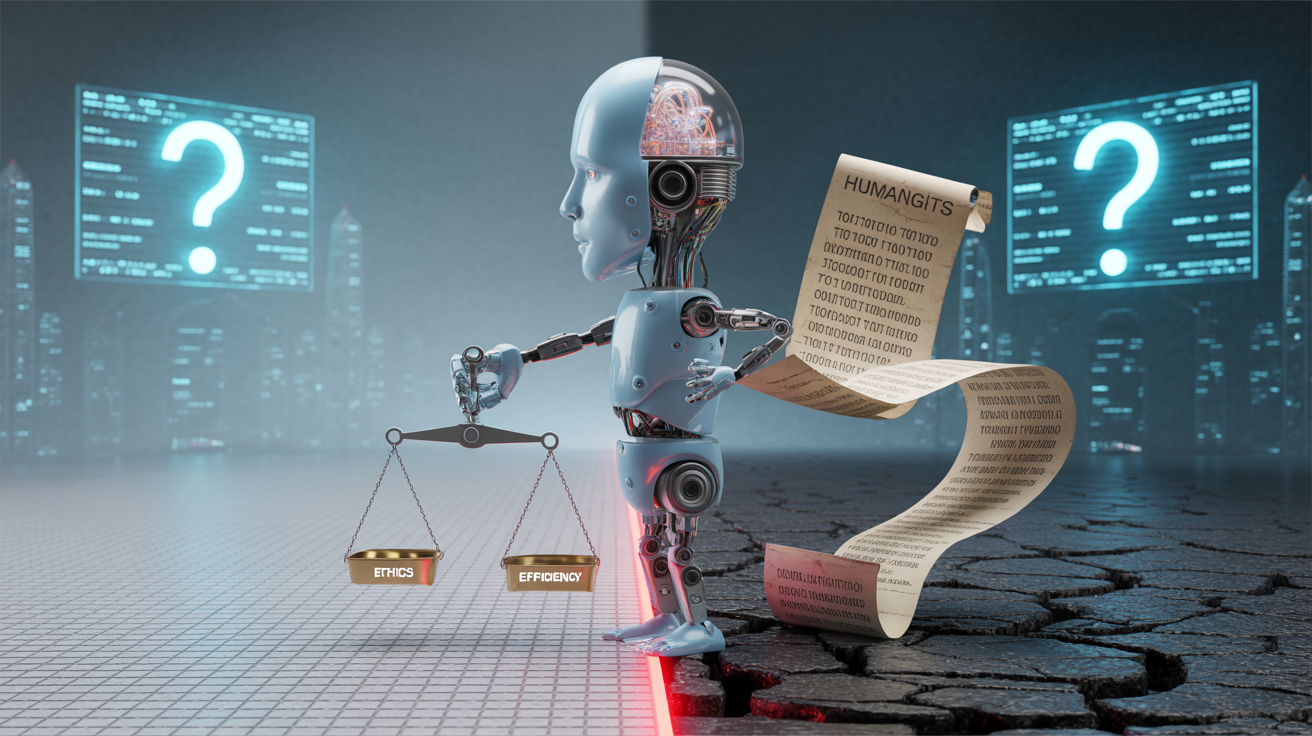
As artificial intelligence (AI) becomes increasingly integrated into our daily lives, concerns around AI Ethics are gaining global attention. From biased algorithms to lack of accountability, ethical questions surrounding AI are no longer theoretical—they’re real, pressing, and impactful(https://bazadseducation.com/?p=3403&preview=true)
How Bias in AI Systems Threatens AI Ethics؟
One common misconception is that machines make objective decisions because they rely on data. In reality, AI systems learn from data provided by humans, and this data often carries human biases—both intentional and unintentional. For example, if a model is trained on unfair historical data, it will reproduce the same discriminatory patterns.
Real-World Example: Bias in Hiring Systems
In 2018, Amazon discovered that its AI hiring algorithm was biased against women. The model had been trained on resumes submitted over a 10-year period, most of which came from men. As a result, the algorithm began downgrading resumes that included words associated with women, like “women’s chess club captain” or “female team leader.”
Read more from this Reuters report
This is just one example of how AI can replicate and even amplify social biases if not carefully managed.
How AI Ethics Is Compromised During the Training Phase؟
The starting point of any AI system is data. The data we use to train models represents the world as it is—not necessarily as it should be. Any existing bias related to gender, race, or socioeconomic status embedded in the data will be picked up by the algorithm.
Worse still, underrepresented groups may be ignored altogether if the data isn’t diverse enough. This creates systems that treat certain people as statistical outliers or anomalies.
ه
Why AI Ethics Matters to Everyone – Not Just Developers؟
1. AI Decisions Can Affect Lives
When companies, banks, or government agencies use AI to make decisions, a biased or faulty system can have devastating consequences. A qualified candidate might be rejected from a job, or a person might be denied a loan, just because of their gender, name, or neighborhood.
2. Lack of Transparency
Many AI systems function as “black boxes.” Even their developers may not fully understand how they reach certain decisions. This creates serious accountability issues—especially when mistakes or injustices occur.
3. Inadequate Regulation
Most countries lack clear laws or frameworks governing the ethical use of AI. While initiatives like the EU Artificial Intelligence Act are a step in the right direction, the world is still in the early stages of building a legal foundation for AI ethics.
Explore the EU’s approach to AI regulation
Is Responsible for Ensuring AI Ethics in Practice؟
That’s a crucial and complex question. Responsibility doesn’t lie solely with the developers writing the code. It must be shared by:
- Companies: ensuring their systems are transparent and as unbiased as possible.
- Governments: establishing and enforcing clear, ethical guidelines.
- Civil Society: demanding fairness, justice, and accountability in AI development.
Understanding Ethical AI: Core Principles?
“Ethical AI” refers to designing and deploying artificial intelligence in a way that respects human values and rights. This includes principles such as:
- Fairness and non-discrimination
- Transparency and explainability
- Data privacy and security
- Accountability and responsibility
These values don’t hinder innovation; they enable a more inclusive and trustworthy form of technological progress.
Global Initiatives and Hopeful Examples
Some international organizations are taking positive steps toward ethical AI:
- The OECD has published guiding principles for responsible AI.
- Google has pledged not to develop AI technologies for weapons or surveillance.
- Microsoft has developed a responsible AI framework focused on transparency, fairness, and accountability.
Learn about the OECD’s AI principles
Impact on Marginalized Communities
Perhaps the most worrying consequence of AI bias is how it disproportionately affects marginalized populations. For instance, facial recognition technologies have shown significantly higher error rates when identifying people of color—particularly Black women—compared to white males. This raises alarming concerns when such technologies are used in policing or border control.
In healthcare, AI systems trained on datasets that lack diversity may misdiagnose or underdiagnose conditions in minority groups. A well-known study published in 2019 revealed that an AI system used to allocate healthcare resources in the U.S. exhibited racial bias, systematically favoring white patients over Black patients with similar health conditions.
The Rise of Generative AI and New Ethical Dilemmas
With the surge of generative AI tools like ChatGPT, DALL·E, and others, new ethical issues have emerged:
- Misinformation: Generative models can produce false or misleading content that spreads easily online.
- Copyright infringement: AI-generated images, music, or text often borrow from copyrighted material without proper attribution.
- Deepfakes: Hyper-realistic but fake videos can be used to defame, manipulate, or mislead the public.
As these tools become more accessible, it’s essential to regulate how they’re used and develop mechanisms to trace, verify, and label AI-generated content.
Reducing Bias for Ethical AI Development?
- Improve Data Quality: Use diverse and balanced datasets that reflect various demographics.
- Rigorous Model Testing: Validate models against fairness metrics and edge cases.
- Promote Transparency: Build explainable systems that provide insight into decision-making.
- Train Development Teams: Educate developers and stakeholders on ethics, bias, and responsible AI.
- Community Involvement: Include voices from diverse communities in the development process.
Can Ethical AI Correct Its Own Biases?
Ironically, AI might help us solve its own problems. Researchers are developing Explainable AI (XAI) techniques to interpret how decisions are made. Others are using AI to audit and flag bias in datasets and algorithms.
Still, AI alone cannot guarantee fairness. Human oversight, transparency, and ethical awareness must guide its development and deployment.
ل
Conclusion: AI Needs Ethics as Much as It Needs Intelligence
AI can be a force for good—or a source of harm—depending on how it’s built and used. From training data to final outputs, every stage requires thoughtful, ethical consideration. Technological progress is not enough; it must be aligned with justice, accountability, and human dignity.
In the end, we don’t just need “smart” systems. We need fair, transparent, and human-centered systems. That’s how we ensure AI works for everyone—not just the few.