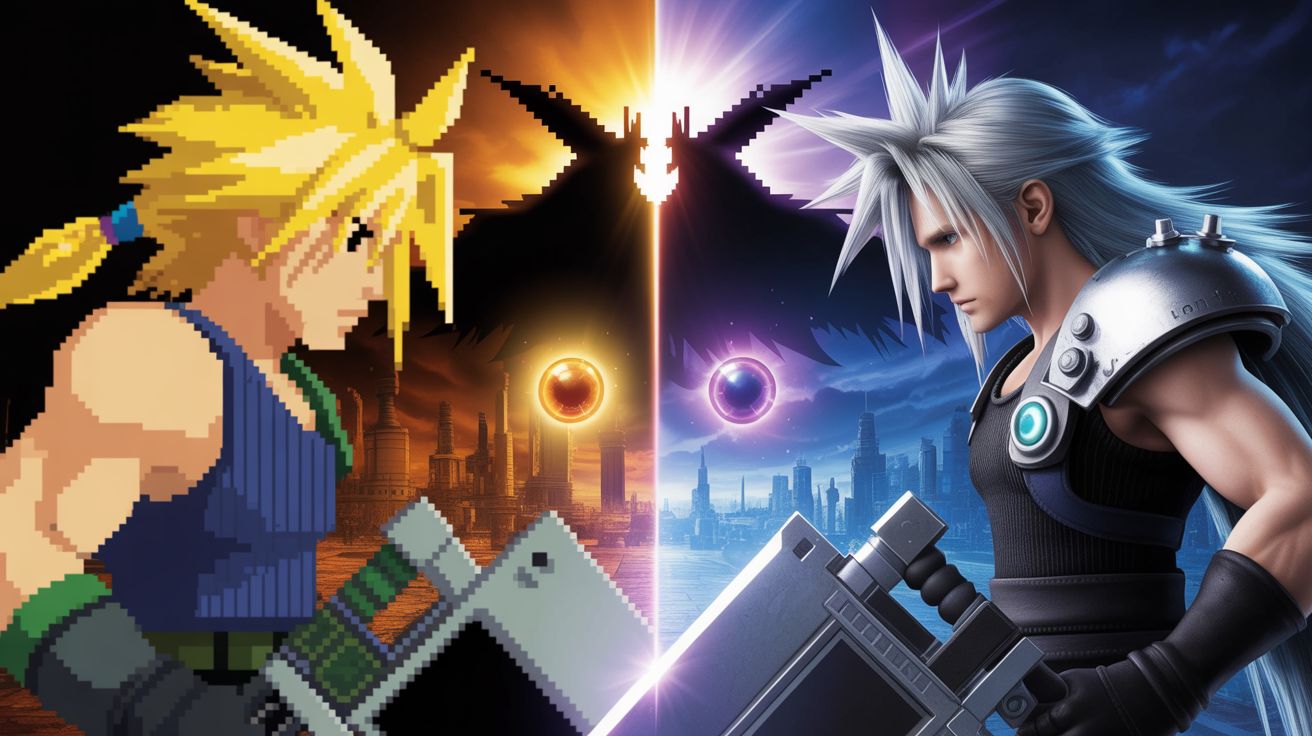
Picture this: you are standing in front of two Massive doors Behind one lies a beloved classic that changed gaming forever in 1997.
behind the other waits a modern reimagining split into multiple parts, starting with Remake in 2020 and continuing with Rebirth in 2024.
which door would you choose? this dilemmafaces every Final Fantasy fan tiday, it is more complicated than you might think.
The original Final Fantasy VII was not just a game – it was a Revolution that introduced countless players to the world of JRPGs. Its polygonal characters, unforgettable story, and groundbreaking cinematics left an indelible mark on gaming history.
Fast forward to today, and Squre Enix has given us not one but Two modern interpretations of this classic tale.
The Remake trilogy ( Starting with FF VII Remake and continuing with Rebirth) promises to expand enhance, and sometimes completely reimagine the original experience.
But here’s the million-gil questions: do these new versions capture the magic of the original, or do they create something entirely different? should newcomers start with the pixelated charm of 1997, or dive headfirst into the stunning visuals of the modern era? Throught this deep dive, we’ll explore the storytelling approaches, visual evolution, gameplay mechanics, and overall impact of eachversion.
by the end, you’ll have a clearer picture of which version deserves a spot in your gaming library – or maybe you’ll realize you need them all.
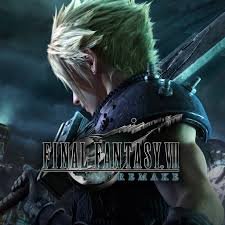
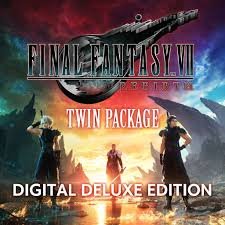
The Art Of Storytelling: Linear Classic vs. Expanded Modern Narrative.
the original Final Fantasy VII told its story like a perfectly crafted novel – linear, focused, and packed with memorable moments that hit at exactly the Right time.
Cloud’s journey from mercenary to hero unfolded over three discs, taking players from the grimy streets of Midgar to the Vast world beyond in about 8 – 10 hours of initial city exploration.
The Pacing was tight, the reveals were perfectly timed, and every major story beat landed with maximum impact.
Players experienced Aerith’s death, Sephiroth’s betrayal, and Cloud’s identity crisis in a carefully orchestrated sequence that felt both superising and inevitable.
The Remake series takes a completely different approach, choosing to EXPAND rather than simply retell. What was once a few hours in Midgar has become an entire 40-hour game in FF VII Remake, with every street corner, side character, & story element fleshed out in incredible detail. Rebirth continues this trend, taking the middle portion of the original story & expanding it into another full-length adventure. This approach allows for deeper character development – we see more of Tifa’s internal struggles, Barret’s past as a father & activist, & Aerith’s growing awareness of her fate.
However, this expansion comes with trade-offs that divide the fanbase. The Remake series introduces WHISPERS – mysterious beings that seem to enforce destiny & keep the story on track. This meta-narrative element suggests that the characters are fighting against their predetermined fate from the original game. Some fans love this fresh take that keeps even veterans guessing, while others feel it unnecessarily complicates a story that was already perfect. The question becomes: does expanding a beloved story enhance it, or does it risk diluting the original’s focused impact?
Visual Evolution: Polygons vs. Photorealism
Looking at the original Final Fantasy VII today is like opening a time capsule from gaming’s adolescence. Those BLOCKY polygonal characters in the field, contrasted with detailed battle models & gorgeous pre-rendered backgrounds, created a unique aesthetic that was cutting-edge for its time. Cloud’s spiky hair was made of literal geometric shapes, & facial expressions were conveyed through body language & text rather than facial animation. Yet somehow, this limitation forced players to use their imagination, filling in the gaps with their own interpretations of how characters looked & felt.
The technical constraints actually worked in the game’s favor in many ways. The pre-rendered backgrounds in locations like the Sector 7 slums, the Gold Saucer, & the Northern Cave were absolutely STUNNING & still hold up today. These painted backdrops had a artistic quality that felt like walking through a living painting. The FMV cutscenes were revolutionary, showing detailed character models & spectacular set pieces that left players’ jaws on the floor. Even today, scenes like the opening bombing mission or Bahamut’s summon sequence retain their visual impact.
The Remake series showcases what modern technology can achieve when applied to a beloved classic. Every strand of Cloud’s hair moves independently, facial expressions convey subtle emotions, & the city of Midgar feels like a living, breathing metropolis. The attention to DETAIL is extraordinary – you can see individual bolts on machinery, read posters on walls, & watch NPCs go about their daily routines. Combat is a spectacular light show of particle effects, magic spells, & cinematic camera work that makes every battle feel like a movie scene.
Yet some fans argue that this photorealism comes at a cost. The original’s abstracted visuals allowed players to project their own interpretations onto the characters, while the Remake’s detailed models lock in specific looks & mannerisms. The stylized approach of the original had a timeless quality, whereas photorealistic graphics may age poorly as technology continues to advance. It raises an interesting question: can technical perfection capture the same magic as imaginative interpretation?
Gameplay Revolution: Turn-Based Strategy vs. Action-RPG Hybrid
The original Final Fantasy VII featured the classic Active Time Battle system that defined JRPGs for DECADES. Players would wait for their ATB gauge to fill, select commands from menus, & watch their characters execute attacks in a semi-turn-based format. This system encouraged strategic thinking – managing MP, choosing the right materia combinations, & timing special abilities for maximum effect. Boss battles became puzzles to solve rather than reflexes to test. The gameplay was accessible to newcomers but offered incredible depth through materia combinations, character builds, & optional superbosses.
This traditional approach had its own rhythm & flow that many fans still prefer today. There was something satisfying about taking your time to consider each move, especially during challenging encounters. The system also allowed for more tactical party management, as you could control all three characters equally & develop complex strategies that utilized everyone’s strengths. Summon spells were EPIC affairs that played out in lengthy, spectacular animations, & using them felt like unleashing ultimate power.
The Remake series completely overhauls this formula, creating a hybrid system that combines real-time action with strategic menu commands. Players control one character directly, moving around the battlefield, dodging attacks, & building up ATB charges through active combat. Once you have ATB segments, you can pause time & select abilities, spells, or items from classic FF menus. It’s an ambitious attempt to modernize classic JRPG mechanics for contemporary audiences who might find pure turn-based combat outdated.
This new system definitely creates more visceral, exciting battles that feel like interactive movie scenes. Dodging Sephiroth’s attacks in real-time or weaving between a dragon’s fire breath creates an adrenaline rush that the original couldn’t match. However, some veteran fans feel that this approach sacrifices the strategic depth & contemplative pacing that made the original special. The question isn’t necessarily which system is better, but which one better serves the overall experience that Final Fantasy VII is trying to create.
The Verdict: Choose Your Own Adventure
After diving deep into both versions, it’s clear that asking “which is better” might be the WRONG question entirely. The original Final Fantasy VII & the Remake series are fundamentally different experiences that happen to share characters & basic plot elements. The classic version offers a complete, focused narrative that can be experienced in its entirety right now. It’s a historical artifact that showcases the artistry possible within technical limitations, & its story beats land with the precision of a master craftsperson.
The Remake series represents a bold experiment in expanding beloved source material for modern audiences. It offers cutting-edge visuals, exciting combat, & deeper character development, but it’s also an incomplete story that may not conclude for several more years. Whether this approach succeeds will largely depend on how satisfying the eventual conclusion proves to be & whether the expanded narrative justifies its existence.
For newcomers to the series, both paths offer valid entry points. Starting with the original provides the “pure” experience & historical context, while beginning with Remake offers modern polish & accessibility. Perhaps the ideal approach is experiencing both – playing the original first to understand what made it special, then diving into the Remake series to see how those ideas translate to modern gaming.
The real winner here might be the fans, who get to experience multiple interpretations of a beloved story. Whether you prefer the focused storytelling of 1997 or the expanded universe of today, Final Fantasy VII continues to evolve & find new ways to capture our imaginations. What matters most isn’t which version you choose, but that you take the time to experience this remarkable journey in with great adventures.